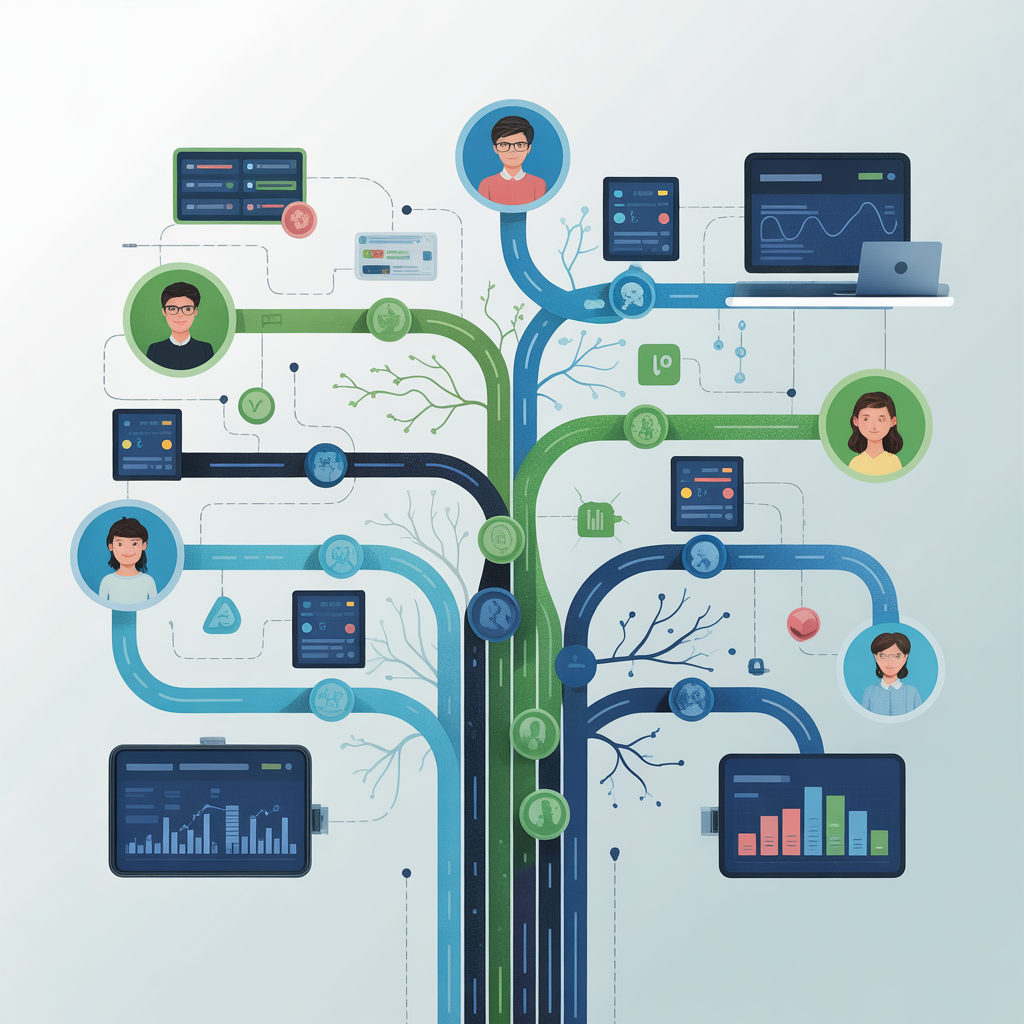
Adaptive Learning Revealed: Rare Insights, Underexplored Opportunities, and Breakthrough Discoveries
Adaptive learning has firmly established itself as a transformative force in modern education and workforce development.
Powered by artificial intelligence, machine learning, and data analytics, adaptive learning systems personalize instruction based on individual performance and behavior.
Yet beyond the mainstream discussion of “personalized learning” lies a deeper layer of innovation.
To truly understand the future of adaptive learning, we must explore rare insights that often go unnoticed, underexplored opportunities that remain untapped, and breakthrough discoveries that are quietly reshaping the educational landscape.
The Evolution of Adaptive Learning
At its core, adaptive learning dynamically adjusts content, pacing, and assessments based on learner interactions. Traditional models follow a fixed sequence; adaptive systems evolve in real time.
Modern platforms track:
-
Accuracy and error patterns
-
Time spent on tasks
-
Engagement behavior
-
Knowledge retention trends
-
Response latency
This data forms the foundation for personalized learning pathways.
However, the real power of adaptive learning emerges when we analyze the subtle mechanisms and emerging research driving its progress.
Rare Insights Into How Adaptive Learning Truly Works
Many discussions focus on surface-level personalization, but several rare insights reveal why adaptive systems outperform static instruction.
Insight #1: Micro-Adaptation Outperforms Macro-Adaptation
A key but often overlooked principle is micro-adaptation. Instead of adjusting entire modules, advanced systems adapt at the micro-skill level.
Knowledge is broken into granular components, allowing the platform to target specific cognitive processes.
For example, in language learning, the system may separate vocabulary recall, grammar structure, pronunciation patterns, and contextual usage into distinct competencies.
Micro-adaptation leads to faster mastery because it isolates weaknesses precisely.
Insight #2: Behavioral Data Is as Important as Performance Data
While correct or incorrect answers provide valuable information, behavioral signals often reveal deeper insights. Rarely discussed indicators include:
-
Hesitation before selecting answers
-
Frequency of revisiting content
-
Scroll speed and navigation habits
-
Break intervals between sessions
These subtle patterns help algorithms gauge confidence, cognitive load, and motivation levels. Adaptive systems that incorporate behavioral analytics tend to deliver stronger outcomes.
Insight #3: Learning Efficiency Is the Hidden Metric
Most institutions measure success through grades or completion rates. However, a more powerful metric is time-to-mastery.
Adaptive systems reduce redundant learning by focusing exclusively on skill gaps.
Efficiency gains often remain underreported, yet they represent one of adaptive learning’s most valuable contributions—especially in corporate environments where time directly impacts productivity.
Underexplored Opportunities in Adaptive Learning
Despite widespread adoption, several promising areas remain underutilized.
Workforce Reskilling in Emerging Industries
As automation and artificial intelligence reshape job markets, adaptive learning presents an underexplored opportunity for continuous workforce reskilling.
Organizations can deploy personalized training pathways aligned with emerging technologies such as data science, cybersecurity, and renewable energy systems.
By identifying skill gaps in real time, adaptive platforms enable companies to respond proactively to industry changes rather than reactively.
Personalized Soft Skills Development
Most adaptive systems focus on technical competencies, yet soft skills—communication, leadership, emotional intelligence—are equally important.
Integrating adaptive simulations that adjust interpersonal scenarios based on learner responses offers significant growth potential.
This underexplored area could transform leadership development programs.
Adaptive Learning in Early Education
Adaptive systems are widely used in higher education and corporate training, but early childhood education represents a major untapped opportunity.
Personalized literacy and numeracy pathways could help close learning gaps before they widen.
When implemented responsibly and ethically, adaptive tools could provide equitable access to foundational skills development.
Global Education Accessibility
Adaptive learning also holds promise for expanding access in underserved regions.
Mobile-based adaptive platforms can deliver personalized instruction where traditional infrastructure is limited.
Scalable personalization allows educational quality to remain high even in resource-constrained environments.
Breakthrough Discoveries Driving the Next Wave
Several recent innovations signal a new era of adaptive learning.
Breakthrough #1: Natural Language Processing (NLP)
Natural language processing has revolutionized how adaptive systems evaluate open-ended responses.
Instead of relying solely on multiple-choice assessments, platforms can now analyze written explanations and short essays.
This breakthrough enables deeper assessment of critical thinking, comprehension, and reasoning skills.
Breakthrough #2: Predictive Learning Models
Predictive analytics represents one of the most powerful discoveries in adaptive learning. By analyzing historical patterns, systems can anticipate future challenges.
For example, if a learner consistently struggles with foundational concepts, the system can predict difficulty in advanced topics and introduce preventive reinforcement.
This proactive model reduces failure rates and improves confidence.
Breakthrough #3: Adaptive Simulations and Immersive Learning
Immersive technologies such as augmented and virtual reality are becoming increasingly adaptive.
Simulations can adjust complexity based on learner decisions, creating realistic, evolving scenarios.
In fields like healthcare, engineering, and aviation, adaptive simulations bridge the gap between theory and practice, improving real-world readiness.
Breakthrough #4: Cross-Platform Skill Portfolios
Another emerging discovery is the integration of adaptive systems across multiple platforms.
Instead of isolated learning experiences, learners build continuous skill portfolios that track progress over time and across institutions.
This interconnected approach supports lifelong learning journeys.
Strategic Implications for Organizations and Institutions
Rare insights and breakthrough technologies translate into strategic advantages.
Increased Agility
Organizations leveraging adaptive learning can pivot quickly when new skills are required. Real-time data reveals competency gaps, enabling rapid deployment of targeted training.
Data-Driven Curriculum Innovation
Adaptive analytics highlight recurring misconceptions and content bottlenecks. Institutions can use these insights to refine course materials and improve instructional clarity.
Curriculum development becomes an ongoing, data-informed process rather than a static design cycle.
Improved Engagement and Retention
Personalized pacing maintains learners within an optimal challenge zone. This balance reduces frustration and boredom, improving engagement and retention rates.
Higher retention not only benefits learners but also strengthens institutional performance metrics.
Measurable Return on Investment
In corporate settings, adaptive learning allows precise measurement of ROI.
Metrics such as reduced onboarding time, increased productivity, and improved performance evaluations provide tangible evidence of impact.
Challenges and Ethical Considerations
As adaptive learning expands, ethical considerations become increasingly important. Data privacy, algorithm transparency, and bias mitigation must remain top priorities.
Institutions should implement:
-
Clear data governance policies
-
Regular algorithm audits
-
Transparent communication with learners
-
Secure storage practices
Responsible implementation ensures trust and long-term sustainability.
The Future Trajectory of Adaptive Learning
The next phase of adaptive learning will likely combine predictive intelligence, immersive simulations, and emotion-aware analytics.
Systems may soon detect frustration or confusion through behavioral cues and adjust instruction instantly.
As artificial intelligence becomes more sophisticated, adaptive platforms will move beyond personalization toward intelligent orchestration—coordinating content, pacing, feedback, and skill mapping seamlessly.
Adaptive learning is no longer a supplementary tool; it is evolving into a foundational framework for education and workforce development.
By embracing rare insights, exploring underexamined opportunities, and leveraging breakthrough discoveries, institutions and organizations can unlock unprecedented potential in personalized learning.
In an era defined by rapid technological change, adaptive systems offer a dynamic pathway to continuous growth and mastery.